“The Dance of Cultures: Dance of the Cranes” is more than a design that captures the beauty of the red-crowned crane. It is a fusion of cultures and tequila, bringing together two Extra Añejos—one primarily aged in brandy casks and the other in Spanish Oloroso sherry casks. In this column, we explore the world behind the name “The Dance of Cultures,” tracing the journey from the encounter with the red-crowned crane to the sculptural design of the decanter, the creation of the tequila blend, and its unveiling on stage by acclaimed Kabuki actor Shido Nakamura.
The Dance of Cultures: Dance of the Cranes
— A Fusion of Cultures Inspired by the Red-Crowned Crane —

The Beauty of the Red-Crowned Cranes I Encountered in Kushiro
By coincidence, I had business in Kushiro this February and had the opportunity to see red-crowned cranes in person.
Their feathers were so brilliantly white that they seemed to blend into the snow, contrasted by the deep black of the neck and flight feathers. At the crown of the head was a single, vivid patch of crimson. This restrained palette, stripped of unnecessary ornament, beautifully accentuates the elegance of their pure white plumage. If I had to sum up my first impression in a few words, it would simply be: white—astonishingly white.
The Red-Crowned Crane and “The Dance of Cultures: Dance of the Cranes”
I was also fortunate enough to witness their courtship dance, with two cranes facing one another in the crisp winter air, spreading their wings and dancing together.
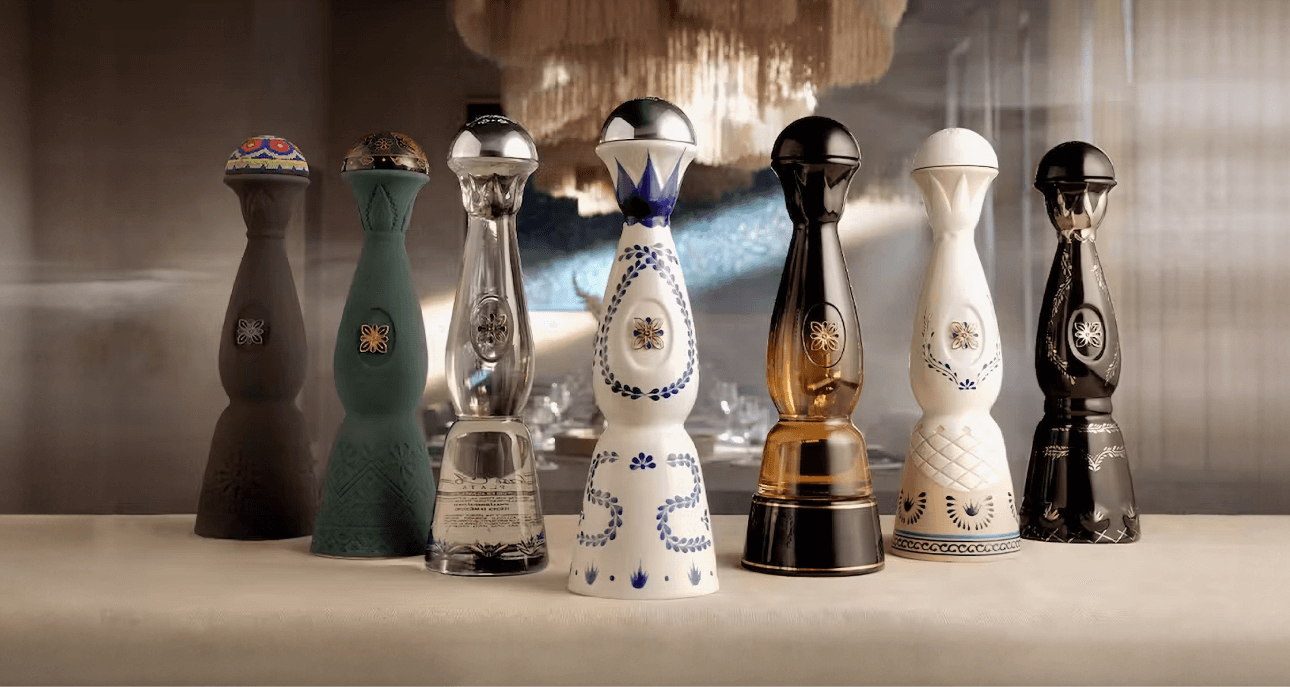
The decanter for “The Dance of Cultures: Dance of the Cranes” captures precisely the impression I had at that moment. I was amazed that this image from the bitter cold of Kushiro could be recreated so faithfully from faraway Mexico. Creative Director Sofia Ortiz Garcia is an artist whose work centers on ceramics, and she has also studied pottery in Japan. Without that experience, I imagine it would have been difficult to achieve this level of artistic expression. The decanter is limited to just 650 pieces.
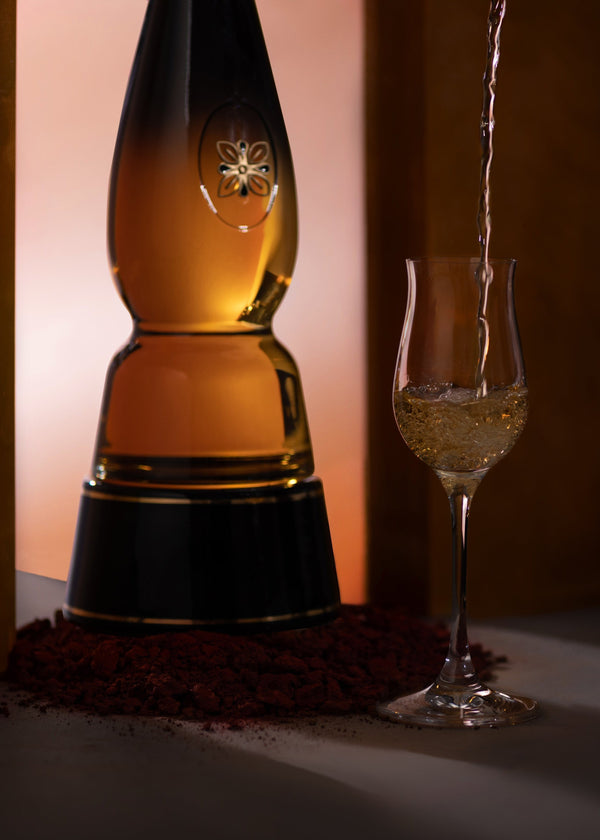
The tequila is crafted as a Joven, centered around Blanco tequila and blended with two Extra Añejos aged for more than six years. One is aged in Cognac casks, while the other is aged in Spanish Oloroso sherry casks.
A Joven Crafted Around Blanco Tequila
The practice of blending Extra Añejo into Blanco to create a Joven is something often seen at Clase Azul, and from a tequila enthusiast’s perspective, it makes perfect sense. The true appeal of tequila lies, above all, in the agave. Unlike the primary ingredients used in other spirits, agave is cultivated for several years and offers beautiful licorice-like aromas and a gentle sweetness that simply cannot be found in grains such as barley or rice. Preserving those essential agave characteristics while carefully layering in additional aromas is an exceptionally logical approach to crafting tequila.
Two Extra Añejos
Two different Extra Añejos are incorporated into this expression. The tequila aged in ex-Cognac casks brings notes of dried fruit, vanilla, caramel, spice, and nuts, while the tequila matured in ex-Spanish Oloroso sherry casks reveals raisins, figs, dates, walnuts, and other nutty aromas. The recipe was created by Master Distiller Viridiana Tinoco, who has spent many years specializing in fermentation research and also holds a master’s degree in Tequila Production Processes from Universidad Autónoma de Guadalajara.
Both the decanter and the tequila itself demonstrate an exceptional level of craftsmanship. Considering the quality of this Japan-exclusive release, “The Dance of Cultures: Dance of the Cranes,” it is easy to understand why so many people travel from overseas specifically to purchase it.
The Unveiling of the Japan-Exclusive “The Dance of Cultures: Dance of the Cranes”
At the recent unveiling event held at Happo-en in Shirokanedai, the venue was filled with guests from around the world. Then, from behind the audience, Shido Nakamura appeared dressed as the lion from the Kabuki play Shakkyo, wearing its distinctive white mane. He dashed through the crowd and onto the stage, where, holding “The Dance of Cultures: Dance of the Cranes” in one hand, he struck a dramatic Kabuki mie pose. Every guest in the room was taken by surprise.
In Kabuki, a folding fan is often used as a prop to symbolize sake or other drinks. This time, however, the role was played by a beautiful tequila bottle depicting the red-crowned crane. It complemented the white lion’s mane remarkably well, creating a truly breathtaking moment for everyone in attendance.
The Concept of “The Dance of Cultures”
In the tasting that followed, the top notes revealed the gentle licorice character of agave alongside citrus, dried fruit, nuts, and fig. On the palate, a smooth sweetness reminiscent of richly structured sugars was accompanied by just a touch of spice. The finish was long, elegant, and beautifully layered, with dried fruit followed by notes of clove.
The decanter, the tequila, and Nakamura’s performance all came together to form a single cultural expression. It was an event that beautifully embodied the concept of “The Dance of Cultures.”
About the Author
Ikuma Hayashi
Born in Tokyo in 1968. Hayashi studied filmmaking at California State University and, after returning to Japan, worked in film production for studios including 20th Century Fox.
Through sharing tequila with numerous renowned figures, including Sean Connery, George Clooney, and filmmaker Takeshi Kitano, he became fascinated by the spirit’s remarkable depth and began exploring tequila culture in earnest.
To date, he has visited more than 100 tequila distilleries.
After returning to Japan, he founded the Japan Tequila Association.
His “Tequila Maestro” course has earned widespread support among bartenders and tequila enthusiasts alike.
He also serves as a judge at major international spirits competitions, including the Concours Mondial de Bruxelles, and has been a member of the executive committee of the Tokyo Whisky & Spirits Competition (TWSC) since its inaugural edition in 2019.
He also serves as an advisor to the Japan Mezcal Association.
He is the author of Tequila Daikan, published by Kosaido Publishing.
In addition to conducting seminars at venues including the Embassy of Mexico, he has made numerous appearances across television, newspapers, magazines, and other media.