A beautiful bottle carries within it a story of heritage and craftsmanship.
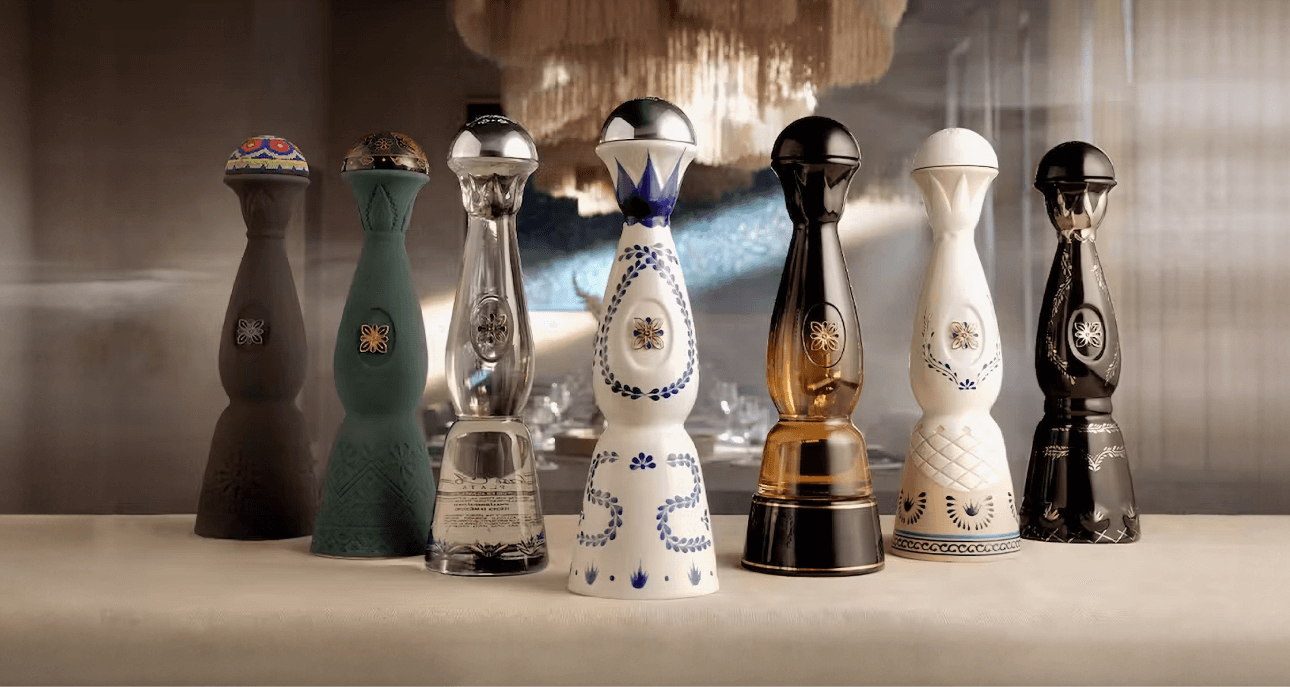
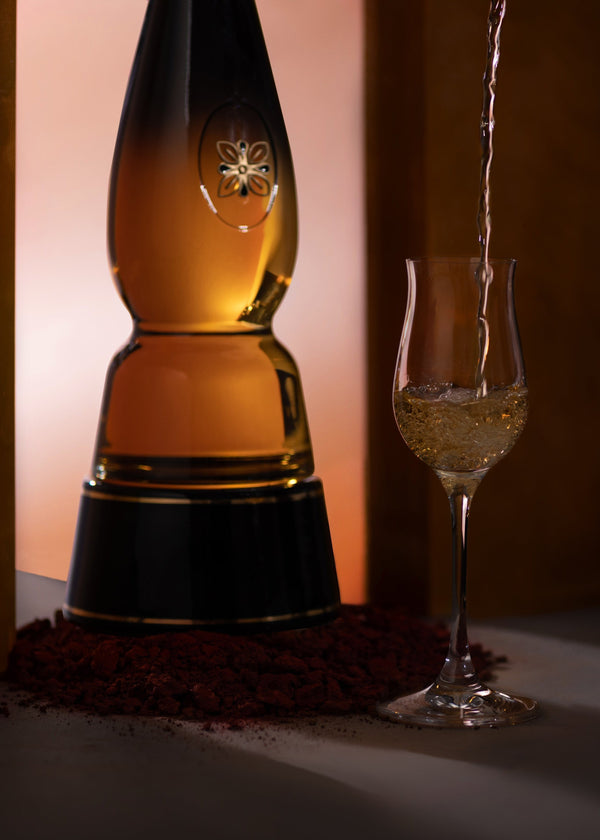
The distinctive decanter of Clase Azul, one of the brand’s most iconic symbols, is far more than a container. With its unique silhouette and hand-painted designs created by skilled Mexican artisans, each decanter is celebrated around the world as a piece of art that reflects Mexico’s rich culture and the passion of its creators.
However, the beautifully designed tequila bottles we see today did not exist from the beginning. Their evolution is the result of the growth of 100% agave tequila, Mexico’s history, traditional craftsmanship passed down through generations, and the culture of enjoying tequila.
In this first edition of the column, Ikuma Hayashi, President of the Tequila Association of Japan and a long-time advocate for tequila culture, explores the history, traditions, and artistry behind tequila bottles, focusing on the question: “Why are tequila bottles so beautiful?”
We invite you to discover the stories and heritage contained within each bottle.
100% Agave Tequila and the Culture of Beautiful Bottles

People who appreciate 100% agave tequila are often associated around the world with being free-spirited, creative, and sophisticated.
In Japan, tequila is still sometimes associated with the image of a party drink or a challenge, but authentic 100% agave tequila represents something entirely different. Made exclusively from agave plants that take several years to mature, it is a premium spirit crafted from a single, carefully selected ingredient, without artificial additives.
One of the defining identities of 100% agave tequila is its beautiful and distinctive bottle design.
However, tequila was not always presented in such unique and artistic bottles.
The Origin of Tequila Bottles: Damajuana
Tequila was once known as Mezcal from the village of Tequila. In the late 1700s, the spirit that would later become tequila began to emerge, and by the mid-1800s, the first dedicated tequila bottles appeared.
One of the earliest examples was the Damajuana, a large, hand-blown spherical glass bottle holding approximately five liters. It was protected with woven agave-fiber rope and was commonly displayed as a historical artifact at tequila distilleries.
The Damajuana was introduced by José Flores Arias (1825–1897), a pioneer who modernized tequila production and owned multiple distilleries. Similar to Japan’s traditional one-sho bottle, it was a standardized and reusable container created to improve tequila distribution.
During this period, tequila produced at distilleries was filled into Damajuanas, transported to cantinas, and served directly to customers. At that time, tequila was not yet associated with individual brands; it was simply enjoyed as Mezcal en Tequila.
Later, in the late 1800s, José Flores Arias developed a smaller portable bottle called Pachoncita, similar in concept to today’s hip flask. Although tequila began to be exported to the United States during this period, bottles had not yet developed their own unique identities.
Tourism and the Evolution of Tequila Bottles
In the 1950s, Mexico experienced a major tourism boom. With the expansion of commercial air travel, international visitors—including celebrities such as Elvis Presley—came to Mexico to experience its music, culture, and lifestyle.
Tequila began to gain attention as a souvenir and a symbol of Mexican heritage. For travelers who wanted to bring home a unique product made from Mexico’s own agave, beautifully designed bottles became increasingly important.
Tonalá Ceramics and the Tradition of Glass Craftsmanship
Near Guadalajara lies the city of Tonalá, a region with a long history of ceramic craftsmanship dating back to before the Aztec era.
Tonalá pottery is known for its smooth textures, created by polishing the surface with stones before firing, and for its use of natural pigments that create elegant, understated colors.
Mexico also has a rich tradition of recycled blown glass known as vidrio soplado. Similar in spirit to Japan’s Ryukyu glass tradition, these handcrafted pieces include unique caballito shot glasses and decorative glassware created from recycled glass materials.
The combination of four elements—the quality of 100% agave tequila, Mexico’s tourism boom, the tradition of Tonalá ceramics, and the craftsmanship of vidrio soplado—helped shape the distinctive tequila bottles we know today.
Clase Azul: The Artistry of Tequila Bottles
Among the many beautiful tequila bottles in the world, Clase Azul represents the pinnacle of tequila bottle artistry.
The iconic silhouette of the decanter is said to have been inspired by the elegant shape of an antique chair leg. When I first experienced Clase Azul in 1997, the memory remained vivid—not only because of the tequila itself, but because of the unforgettable beauty of its bottle.
Each decanter’s design is unique, with patterns individually painted by hand. In New York bars, I have seen empty Clase Azul Reposado bottles displayed according to their artists, with bartenders sharing stories about rare patterns that appeared only once among hundreds of bottles.
A bottle believed to be one of the rarest designs felt, somehow, even more special—and perhaps even made the tequila taste better.
A Story Within Every Bottle
Every bottle of tequila carries its own story.
Different people, in different places, with different perspectives, come together to enjoy tequila in their own way.
This is the true beauty of tequila: a spirit that represents openness, connection, and the generosity of its culture.
【About the Author】
Ikuma Hayashi
Born in Tokyo in 1968.
After studying film production at California State University, Ikuma Hayashi worked with film studios including 20th Century Fox before returning to Japan.
Through encounters with tequila alongside many notable figures, including Sean Connery, George Clooney, and Takeshi Kitano, he developed a deep passion for exploring tequila culture.
He has visited more than 100 tequila distilleries worldwide and founded the Tequila Association of Japan.
He is also the founder of the Tequila Maestro Course, which is highly regarded among bartenders and tequila enthusiasts.
He has served as a judge for international spirits competitions, including the Brussels International Competition, and has been involved with the Tokyo Whisky & Spirits Competition (TWSC) since its first edition in 2019.
He also serves as an advisor to the Japan Mezcal Association and is the author of The Complete Tequila Guide (Kosaido Publishing).
Through seminars held at the Embassy of Mexico and various other venues, as well as appearances in television, newspapers, magazines, and other media, he continues to promote tequila culture throughout Japan.